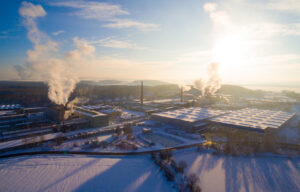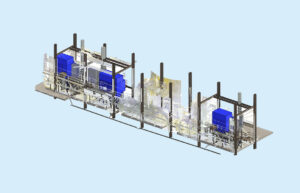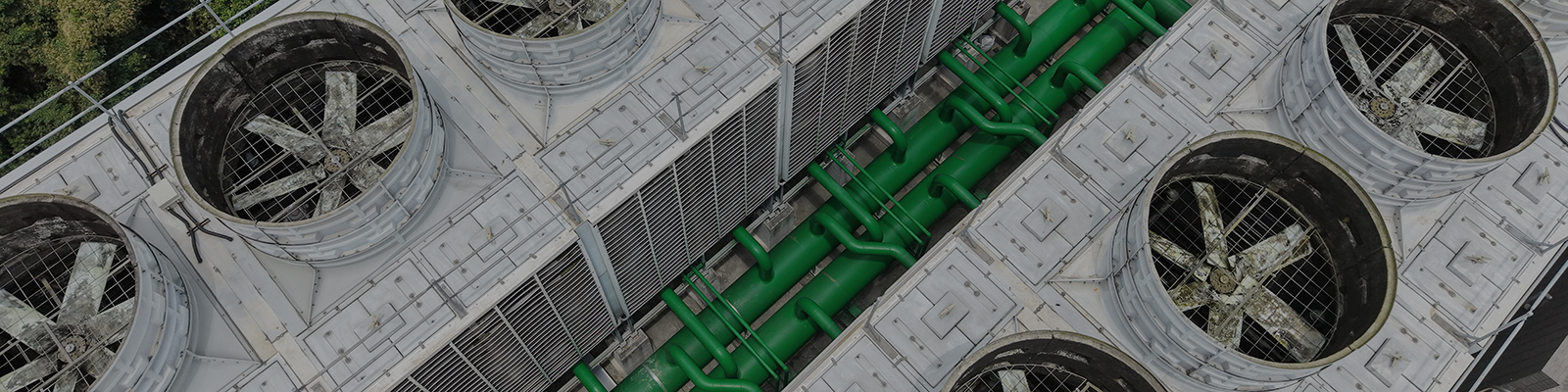
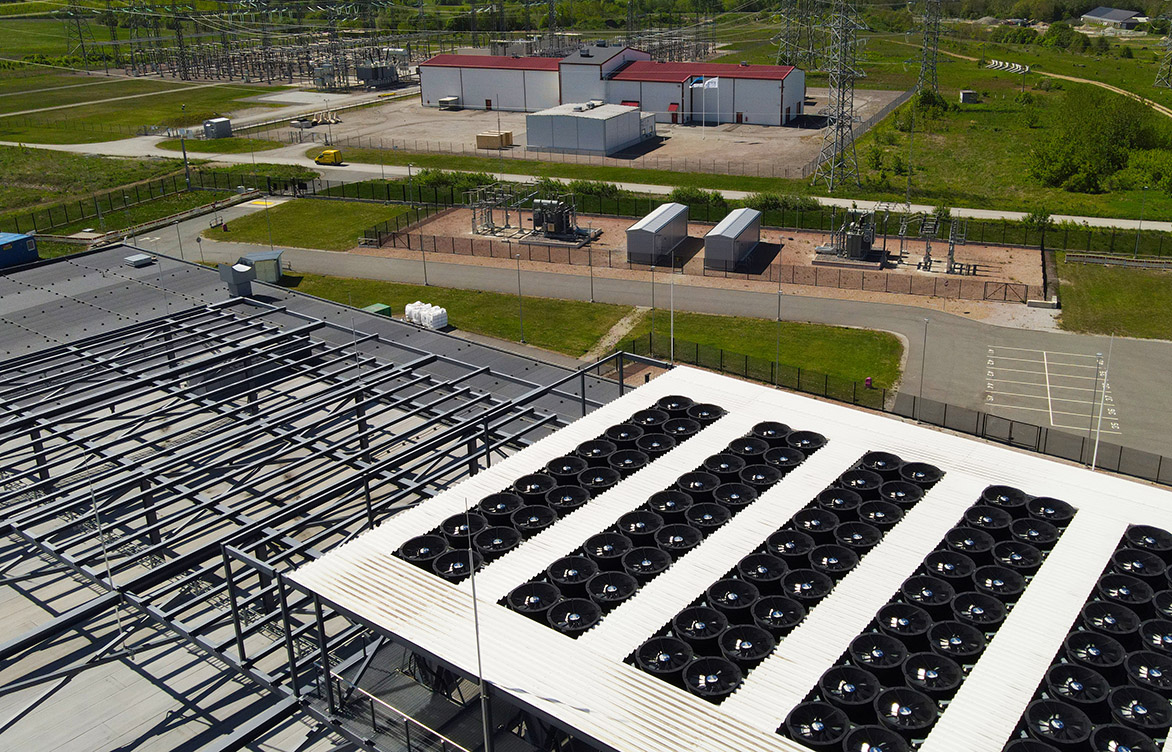
 Co-located cooling and electrical infrastructure—like backup power and substations—can influence whether data center projects trigger New Source Review and how they’re evaluated under air permitting regulations.
Article summary: As data center demand accelerates, air permitting has emerged as a critical factor influencing project timelines, costs, and risk exposure. Programs like New Source Review (NSR) are being triggered more frequently due to large-scale power generation and redundancy requirements, making early planning essential. Key issues such as source aggregation, facility proximity, and cumulative emissions can significantly affect whether a project is classified as minor or major under regulatory thresholds. For data center developers, addressing permitting considerations upfront can help avoid costly delays, regulatory surprises, and design constraints later in the project lifecycle.
As data centers scale up, air permitting has become a critical driver of project risk, cost, and timing. One reason is New Source Review (NSR), a Clean Air Act permitting program that can be triggered when new or modified facilities increase air emissions beyond certain thresholds. For data centers, NSR often comes into play due to the size and configuration requirements for on- and near‑site power generation.
For data centers, NSR often comes into play due to the size and configuration requirements for on- and near‑site power generation.
Adam Driscoll operates in that intersection of power, permitting, and regulatory compliance. A senior environmental engineer with 20 years of experience supporting complex industrial projects, Adam helps data center developers and owner-operators navigate air permitting requirements for new and expanding facilities.
In this Q&A, Adam explains why NSR is increasingly relevant for data center projects, where owners are likely to encounter permitting challenges, and how early decisions about power, equipment, and contracts can influence air‑permitting outcomes and project timelines.
Why is air permitting becoming such a significant issue for data center projects?
The biggest factor is scale. After more than a decade of relatively flat electricity demand, we’re now seeing a rapid increase driven largely by data centers and broader electrification across the economy. To support that demand, projects are turning to on-site and near-site power generation—often on aggressive schedules.
From an air permitting perspective, the rules themselves aren’t new. What’s changed is how frequently they’re triggered. Large fleets of engines, fast‑tracked construction, and redundancy requirements all raise questions under NSR and related programs. For owners and operators, that means air permitting needs to be addressed early, not treated as a downstream checkbox.
What’s the most common air permitting pitfall you’re seeing with data centers?
For data center owners, aggregation decisions can materially change project risk and cost, so it’s wise to address the status of nearby sources early.
Source aggregation. Many permitting challenges come down to whether multiple emission units—often owned and operated by separate entities—are treated as a single stationary source under the Clean Air Act.
Source aggregation can influence whether a project is minor or major, which in turn affects permitting timelines, public review, modeling requirements, and control obligations. For data center owners, aggregation decisions can materially change project risk and cost, so it’s wise to address the status of nearby sources early to avoid significant surprises late in the process.
How does the EPA decide when sources are aggregated?
The analysis still relies on three longstanding criteria:
- Are the sources part of the same industrial grouping?
- Are they located on contiguous or adjacent properties?
- Are they under common control?
In data centers, aggregation questions often arise when power generation is co-located or nearby. Even if facilities have different Standard Industrial Classification codes, they may still be aggregated depending on the specifics of the support relationship between the power generation and the data center.
Does physical distance still matter for aggregation?
Yes—very much so. While there was a period where regulators emphasized functional relationships between facilities, recent guidance has refocused on proximity. Agencies often return to what the EPA has described as the “common‑sense notion of a plant.”
If a data center and a power facility are separated by miles of land, aggregation is less likely, even if there’s a close operational relationship. That said, these are fact‑specific determinations made by state or local permitting authorities, so early discussions with regulators are essential.
Backup and emergency engines are essential for uptime. What air issues do they raise?
Owners should expect more scrutiny around engine counts, testing schedules, and worst‑case scenarios.
Backup power is a major driver of air permitting complexity for data centers. Individually, emergency engines may operate infrequently. Collectively, however, large fleets can raise concerns about cumulative emissions, ambient impacts, and modeling assumptions—especially if many engines could operate simultaneously during an outage.
Regulators are increasingly asking whether traditional assumptions still hold when entire fleets run at once. Owners should expect more scrutiny around engine counts, testing schedules, and worst‑case scenarios.
For help understanding how air permitting and New Source Review requirements may affect your data center project, contact our team.
About Adam Driscoll
Adam Driscoll, vice president and senior environmental engineer, has two decades of experience with environmental permitting and compliance, gained primarily at power-generation, manufacturing, refining, and mining facilities. His areas of expertise include complex air-quality permitting, environmental auditing, and other types of regulatory compliance. Adam’s background also includes three years at 3M Company, where he led cross-functional environmental, health, and safety audits at facilities around the globe, helped obtain critical environmental permits, and negotiated issues of non-compliance with regulatory agencies.