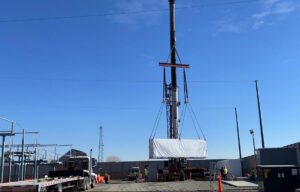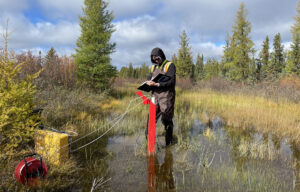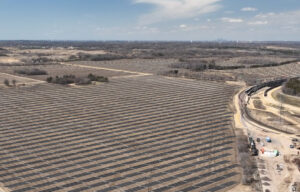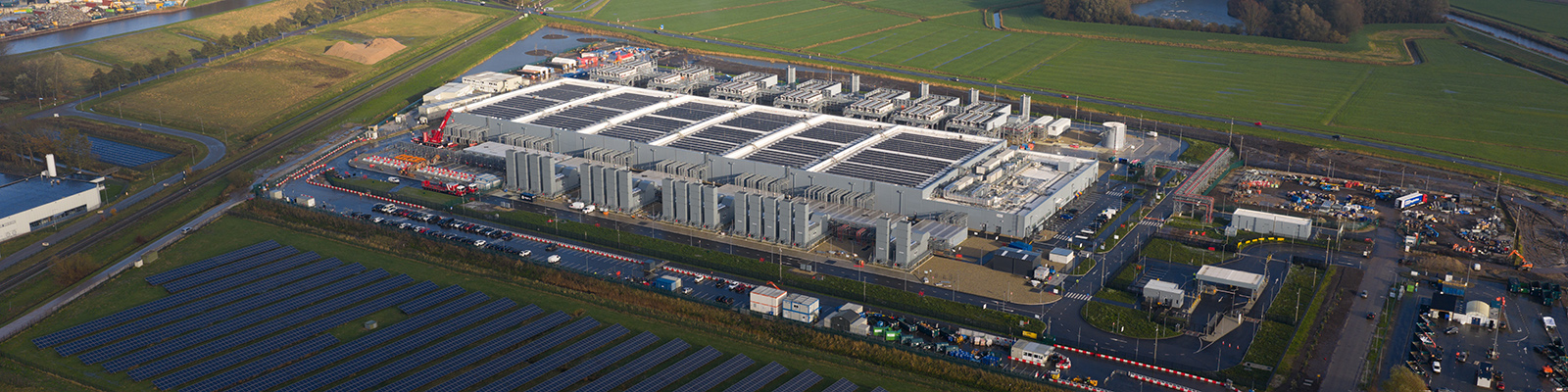
 As data centers scale to meet demand, their development increasingly mirrors large industrial infrastructure—bringing greater complexity, visibility, and scrutiny throughout the permitting process.
Article summary: Data center development is entering a new phase. As projects grow in size and resource demand, they are being evaluated less like commercial uses and more like industrial infrastructure. This shift is not just about scale. It is also about how these projects are classified, which shapes permitting expectations and community response.
For years, data centers existed largely out of view. They were relatively small, set in commercial zones, and, outside of local approval, drew hardly any attention. That era is over. And so, too, is the permitting framework that allowed those projects to advance largely under the radar.
Today’s data centers are large, visible, and often resource intensive. They require more power than their predecessors, and their operational considerations extend well beyond the site boundary. Many face sustained regulatory review and heightened public scrutiny that project developers and owners haven’t experienced.
This shift is not just about scale. It is also about how these projects are classified, which in turn affects the rules and requirements they may need to follow.
This shift is not just about scale. It is also about how these projects are classified, which in turn affects the rules and requirements they may need to follow. That’s an important distinction, particularly when communities express concern about a proposed data center.
The questions that surface are not new, however. How will resource demands be met? How are impacts evaluated? What level of design is needed to move forward with confidence? These questions have shaped large-scale projects for decades. What’s changed is that data centers are now moving through a process long established for large industrial and infrastructure projects.
If there’s a prevailing message from Barr’s 60 years of supporting permitting projects, it is this: Engage the process “through the front door.” That means working within established frameworks, staying on top of when they’re changing, engaging with agencies and communities early, and earning buy-in by sharing the facts.
Let’s unpack what this looks like.
Information: Choose timing over volume
A challenge for data center developers can be misaligned expectations for sharing information. Permitting and public engagement often begin before designs are fully defined. Further, much of the design information can constitute sensitive competitive details, which limits what can be communicated externally.
Developers are expected to respond to questions about water use, power demand, site layout, and operational impacts, even though many of those details are still evolving. Responding effectively requires more than providing information. It means distinguishing what is known from what is still being refined, and knowing how to communicate both in context.
When developers share known, grounded information as it becomes available, they maximize their ability to earn credibility, and their projects remain adaptable.
This is done by communicating ranges rather than fixed values and separating assumptions from finalized decisions. It also means identifying which elements matter most in the early stages. Overall footprint, general resource demand, and key operating characteristics are always high on that list.
Preparation matters, too. Projects supported by baseline studies, preliminary modeling, and a clear understanding of regulatory expectations are better equipped to respond with technical grounding rather than generalities. Whether the issue is water sourcing, noise, or air permitting, the ability to explain how impacts are evaluated and managed will favorably shape conversations with communities or agencies.
When developers share known, grounded information as it becomes available, they maximize their ability to earn credibility, and their projects remain adaptable.
Community concerns: Beyond the technical
Permitting processes rely on measurable impacts. Data, modeling, and regulatory frameworks define how projects are evaluated. That work is essential, but it doesn’t solely determine how projects are received.
Community concerns typically look beyond technical questions. Barr often serves as a technical resource for developer clients at public meetings, where residents and local leaders are likely to raise concerns about land use, growth, and resource allocation. Negative experiences with prior developments sometimes shape those concerns.
Here’s where listening is critical. Two-way dialogue—shaped by a genuine intent to hear and address community input and questions—can resolve concerns that are not immediately visible, dispel false narratives, and highlight where additional context or analysis is needed.
Projects that move forward more efficiently account for both dimensions: technical discovery and meaningful context for the community.
Go with the permitting flow
Permitting can be particularly challenging when projects don’t fit neatly into a single regulatory category. Data centers, because they have characteristics of both commercial and industrial development, often fall into this space. That can create uncertainty, especially at the state and local level.
For these reasons, it’s essential to diligently work through permitting frameworks. Treating permitting as a core workstream involves understanding how regulations shape design decisions, identifying where additional analysis is needed, and aligning project milestones with permitting timelines.
For developers working across multiple regions, this also means recognizing that requirements may differ in meaningful ways. Familiarity with how agencies interpret and apply regulations can reduce uncertainty and improve sequencing.
The winning playbook
Too often, that familiarity is absent. The data center field has drawn a wide range of participants, from experienced infrastructure developers to new market entrants. As the industry matures, it rewards a winning game plan.
While pursuing data center projects, some developers adhere to a traditional commercial-development mindset. Others frame the effort from the onset with the recognition that they operate at the scale and complexity of large infrastructure.
The path “through the front door” is about navigating complex permitting processes strategically and intentionally.
At Barr, we define large-scale projects not by how quickly they start, but by how effectively they are executed. Permitting, technical analysis, and community engagement are the mechanisms through which projects are understood, tested, and ultimately approved.
The path “through the front door” is about navigating complex permitting processes strategically and intentionally. That process can be demanding, but it is also familiar. The same kinds of questions, tradeoffs, and scrutiny have shaped other large-scale projects for decades.
Uncovering the strategy to address permitting realities—that’s the sweet spot where Barr operates. We understand how those processes unfold, where friction tends to surface, and how to move through them without losing momentum. In short, we help clients position their projects with confidence.
If you are a developer who shares this mindset, let’s talk.
For help navigating data center permitting and positioning your project for success, contact our team.
About the authors
Adam Driscoll, vice president and senior environmental engineer, has two decades of experience with environmental permitting and compliance, gained primarily at power-generation, manufacturing, refining, and mining facilities. His areas of expertise include complex air-quality permitting, environmental auditing, and other types of regulatory compliance. Adam’s background also includes three years at 3M Company, where he led cross-functional environmental, health, and safety audits at facilities around the globe, helped obtain critical environmental permits, and negotiated issues of non-compliance with regulatory agencies.
Sarah Johnson, vice president and senior environmental scientist, has 17 years of experience helping clients develop environmental impact assessment and permitting strategies. She regularly leads multidisciplinary teams in the data center, power-delivery, and renewable-energy sectors.