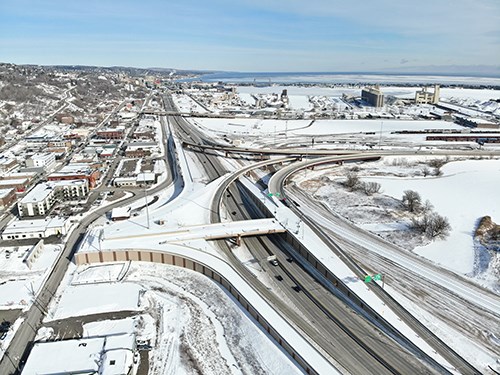
To support the Minnesota Department of Transportation’s (MnDOT) Twin Ports Interchange (TPI) project in Duluth, Barr provided advanced geotechnical engineering services to address challenging subsurface conditions. The project replaced aging elevated roadways and infrastructure with embankment-supported concrete pavement and seven bridges, aiming to enhance traffic safety and increase freight capacity.
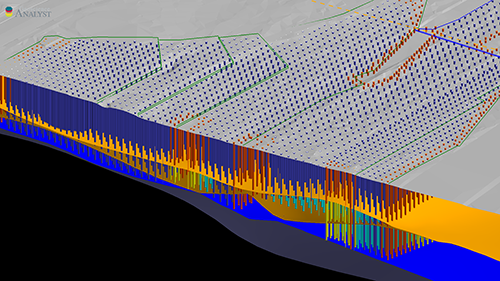
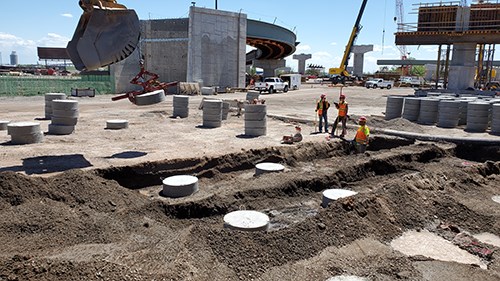
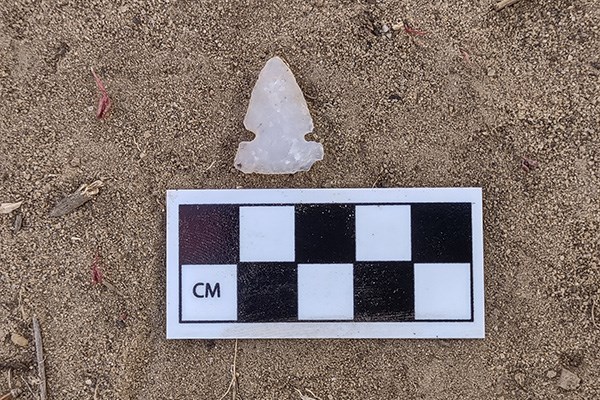
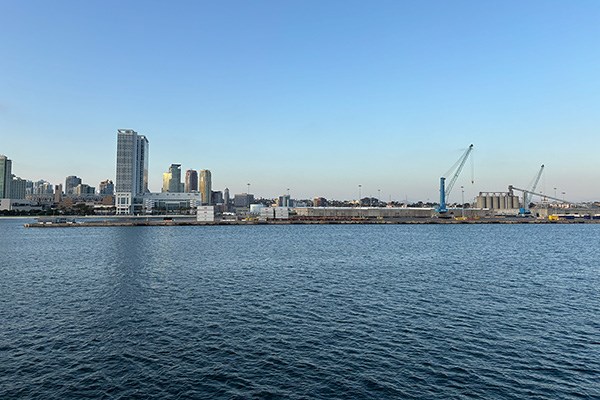
The site, adjacent to Lake Superior and near the mouth of the St. Louis River, features soft, compressible soils, shallow groundwater, and decades of industrial fill. To mitigate settlement risk, Barr designed a column-supported embankment (CSE) system covering an area of over 13 acres to support the interchange. This system features an array of over 8,200 vertical columns with caps supporting a load transfer platform and lateral reinforcement to stabilize the new embankments, which range in height from 5 to 35 feet.
Barr and our subconsultant developed a detailed 3D subsurface model and performed advanced geotechnical numerical modeling analyses using FLAC3D to simulate soil-structure interactions, evaluate embankment settlement, and optimize the ground improvement design. The models formed the basis of design for the ground improvement system. Our team also supported MnDOT’s field test program during design, calibrating numerical models with real-world data and refining installation methods.
The construction of a CSE system requires site-specific load testing and specialized geotechnical instrumentation to confirm that the system is installed and performs as intended. Barr recommended load testing of the columns to confirm installation and recommended geotechnical instrumentation to monitor the performance of the CSE components. Instrumentation included strain gages in columns, strain gages on lateral reinforcement, horizontal and vertical in-place inclinometers with accelerometer sensors, settlement plates, piezometers, and earth pressure cells. Barr also provided structural monitoring of the existing traffic-bearing bridges and the newly constructed bridge substructures, which were susceptible to adverse movements from CSE construction.
The project was completed in October 2025 through MnDOT’s Construction Manager/General Contractor project delivery program.