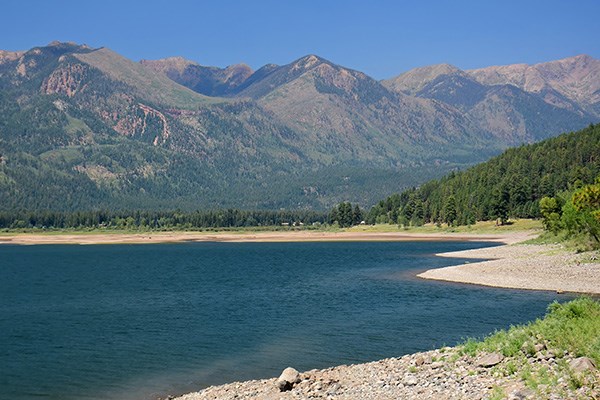
The Deerfield and Pactola Reservoirs play a critical role in supplying municipal and irrigation water, supporting flood control, and sustaining recreation and environmental flows in South Dakota’s upper Rapid Creek basin. When the combination of increasing demand, climate variability, and legacy operating rules created management challenges, West Dakota Water Development District, the City of Rapid City, and the U.S. Bureau of Reclamation decided to evaluate new water management strategies to maintain regulatory and contractual commitments while improving the reservoir system’s performance.
Barr developed a comprehensive reservoir operations model that helped the partners understand how modified operating rules could improve downstream delivery, watershed health, and operational efficiency, as well as potential trade-offs related to water storage and flood protection.
Building on earlier academic work and compiling more than 60 years of hydrologic, reservoir operations, and water-use data, we created a baseline RiverWare model that reflects current operations, including release rules, allocations, and flood-control constraints. We calibrated and validated the model against the historical data, collaborating closely with the project partners to build confidence in its accuracy and applicability. We also worked closely with the partners to define key decision points and performance metrics tied to water supply reliability, storage, efficiency, and flood risk to guide the project.
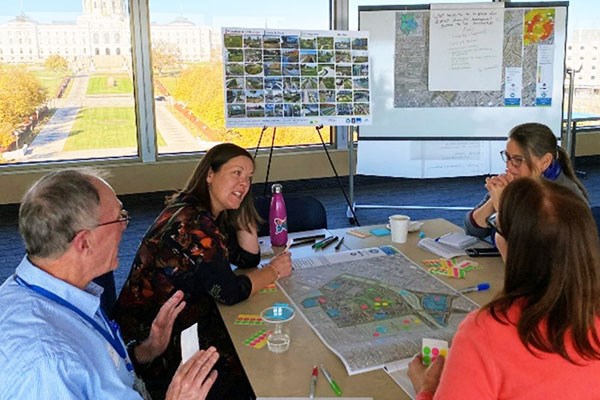
Using the RiverWare model and the RiverSMART platform, we then evaluated 672 operational scenarios across a wide range of hydrologic conditions, including probabilistic simulations representing long-term climate variability. This transparent, scenario-based modeling approach enabled the partners to build a shared understanding of operational risks and tradeoffs, then identify those strategies that improve performance relative to current operations.
As the partners advance toward selecting a new management strategy and planning for its implementation, Barr is making additional model refinements so that the model continues to serve as a shared, reliable tool for enhancing water supply reliability, watershed health, and long-term reservoir performance.
This project is supported by Black Hills Flyfishers, Dakota Trout (Trout Unlimited), and South Dakota Department of Game Fish and Parks. It is also funded by a Bureau of Reclamation WaterSMART grant that Barr helped the partners develop.