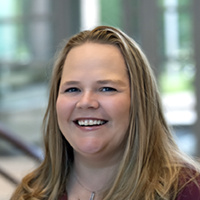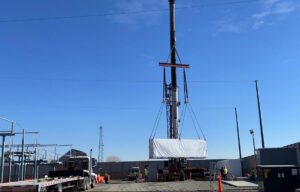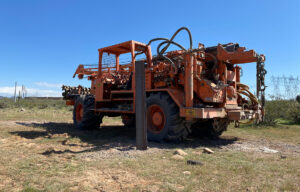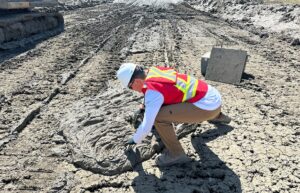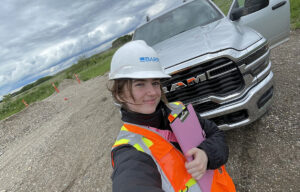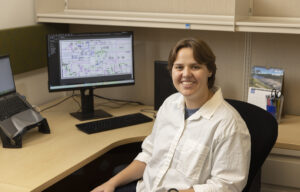


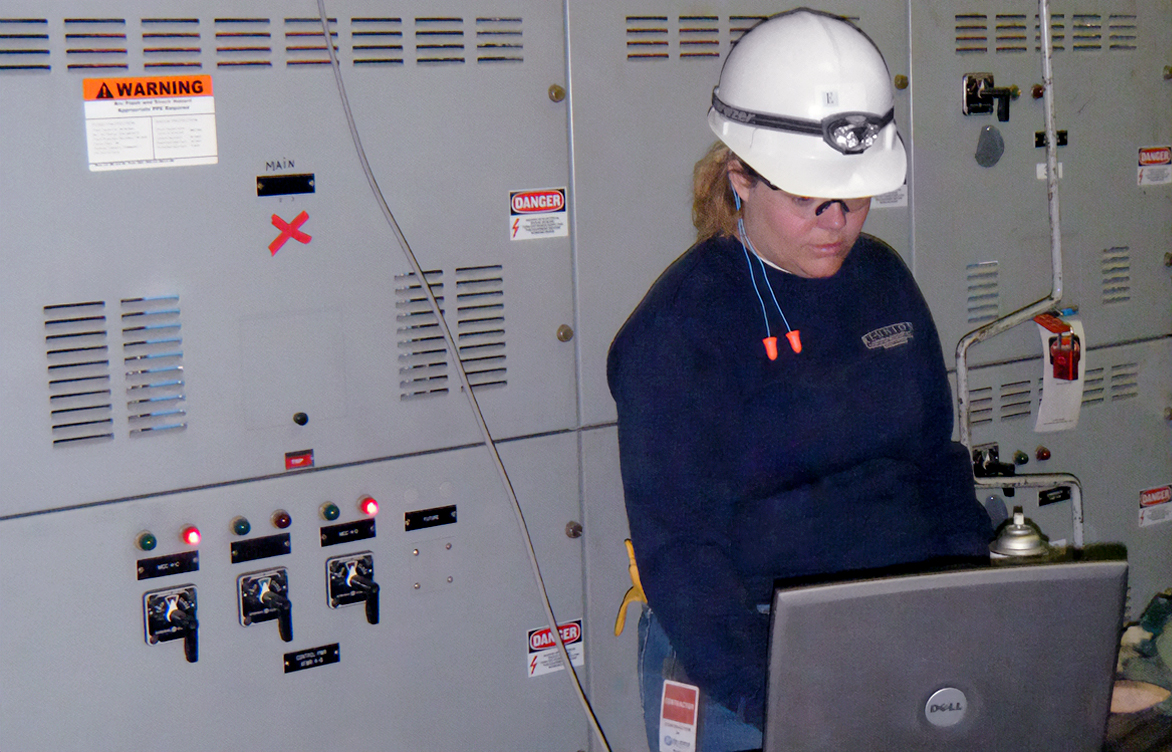
 Darcy Tenan is on site, commissioning the new relays for a 480V relay upgrade project. This project delivered engineering design, drawings, and relay settings to upgrade the existing electromechanical relays with new microprocessor relays.
Darcy Tenan is powering progress
Article summary: Senior electrical engineer Darcy Tenan shares how her career in power delivery has evolved alongside the rapid growth of battery energy storage systems (BESS), renewables, and grid modernization. From transmission and distribution design to supporting one of Colorado’s largest BESS projects, Darcy highlights the importance of collaboration, early permitting conversations, and adaptable engineering solutions. Her story reflects how Barr helps utilities navigate complex power delivery challenges while preparing the grid for the future.
For Darcy Tenan, senior electrical engineer, engineering isn’t just about wires and circuits—it’s about solving complex problems that keep communities powered and prepared for the future. From her early days designing transmission lines to today’s work integrating battery energy storage systems (BESS) and renewables, Darcy’s career reflects a drive to adapt and innovate in a rapidly changing power landscape.
What’s the story behind your path to Barr?
I began my career with an internship at Mountain Parks Electric, Inc., a member-owned electric utility cooperative in Granby, Colorado. I was responsible for staking electrical components for new customers and assisting with substation, transmission line, and industrial plant projects. Then I joined Exponential Engineering Company (EEC) and worked on a wide range of projects—everything from transmission and distribution line designs to relay upgrades, substation protection and controls, BESS projects, and system studies. When EEC joined Barr a couple of years ago, I continued working on similar projects, now with the benefit of collaborating with Barr’s structural, environmental, and geotechnical experts. Now that we’re all under one roof, projects just run more smoothly.
What does a week in your role typically look like?
No two weeks are the same, but I’m always working on a variety of projects with team members across the engineering and environmental spectrum of Barr’s services, managing schedules and deliverables, and developing proposals for new opportunities. It’s a mix of technical problem-solving and client-focused planning.
What do you find most rewarding about your work?
I love that every project brings unique challenges.
I love that every project brings unique challenges. Finding solutions that meet those challenges and deliver successful outcomes for clients is incredibly rewarding. The variety of projects and team members keeps me engaged and motivated. For example, I had the opportunity to work with a diverse Barr team to provide services supporting feasibility and siting studies; permitting; and the civil, foundation, and electrical designs for one of Colorado’s largest BESS projects to date.
What do you wish power industry owners and operators knew before starting a BESS or power delivery project?
It’s not widely known that many local permitting jurisdictions don’t yet have clear requirements for BESS. Most jurisdictions have not had any BESS installed in their area and therefore haven’t developed permitting guidelines for them. Until they do, early conversations with those jurisdictions—and involving engineers in those discussions—are critical. These upfront meetings help define expectations and avoid permitting delays. It’s also important to plan for realistic permitting timelines that accommodate uncertainty, since rules aren’t well established.
How has your role evolved over time, and what trends are shaping your projects?
The biggest change has been the rise of new generation sources connecting to the grid (such as solar power and BESS), which means utilities need robust interconnection processes and standards to ensure that any new generation source does not have a negative impact on the rest of the electric grid. These processes and standards are continually being modified as new requirements are developed by standards committees and regulatory commissions.
I’m seeing increased interest in incorporating BESS, solar, and other renewable connections to distribution systems—both to manage costs and improve reliability.
Another shift is the impact of equipment delivery timelines, which now plays a major role in project planning. Equipment delivery timelines began to expand during the COVID-19 pandemic, which disrupted supply chains. Additional constraints affecting raw materials used to manufacture the equipment are also causing delays.
On the client side, I’m seeing increased interest in incorporating BESS, solar, and other renewable connections to distribution systems—both to manage costs and improve reliability. Incorporating BESS to the distribution system allows a utility to charge the batteries when power is inexpensive and discharge the batteries during peak hours to decrease costs during those periods. Connecting renewables to distribution systems provides the utility the ability to restore power faster during outages.
What motivates you to get to work every day?
I’m motivated by the challenge of solving complex problems and delivering successful projects for clients. I also value working with Barr’s talented power delivery folks and the opportunity to both mentor and learn from others.
How do you like to spend your free time?
Family time is my favorite—my two boys are active in sports, so evenings and weekends are often spent cheering them on. Outside of that, I enjoy fishing, hunting, the occasional round of golf, reading, and working on various crafts.
Looking for BESS solutions? Contact our team to get started.
About Darcy Tenan
Darcy Tenan is a senior electrical engineer with over 20 years of electrical engineering and project management experience in transmission and distribution, protective relaying, planning, studies, substations, and severance analyses for power generation plants, public utilities, industrial facilities, and substations. She has extensive experience in the design of transmission and distribution lines, including analyzing existing lines, structure strength, and performance for structure-type selection.
Image gallery (below)
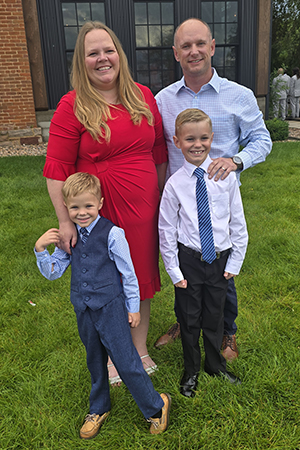
- Darcy, her husband, and their two children attend a wedding together.
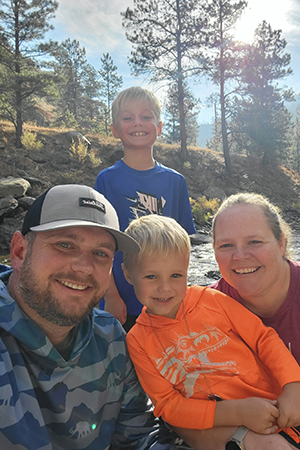
- Darcy and her family explore Poudre Canyon in northern Colorado, one of their favorite day-trip destinations because of its diverse wildlife and activities.
Image gallery