

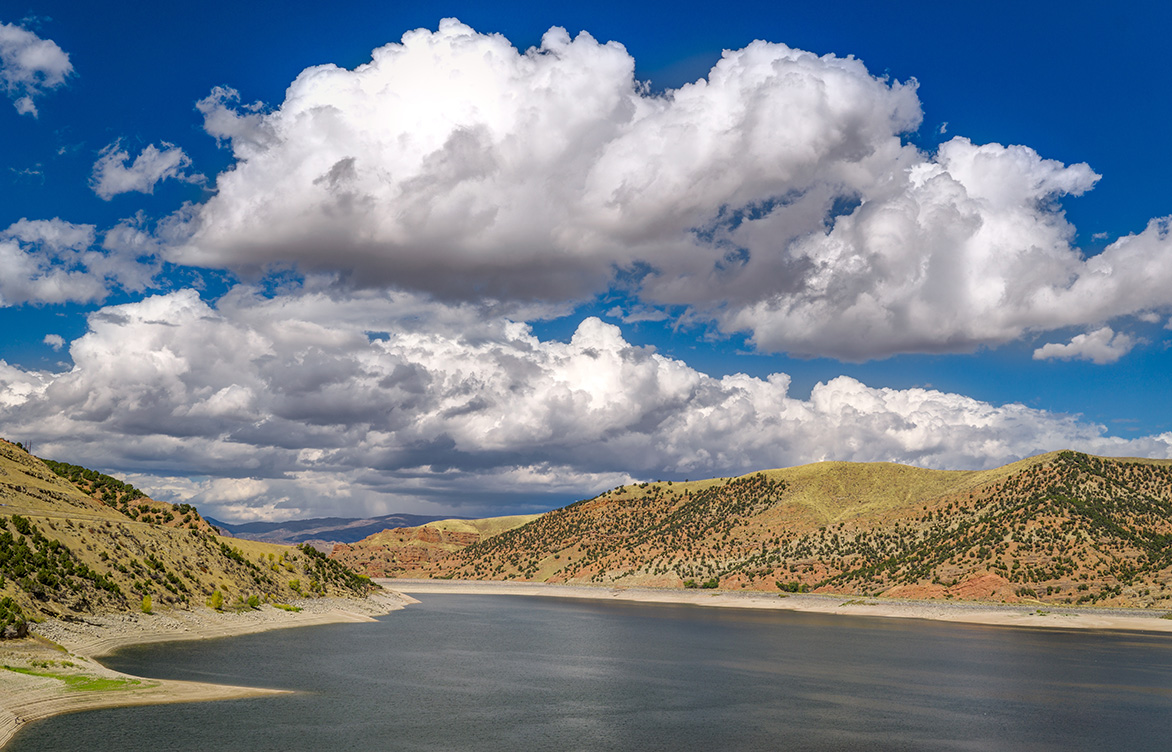
 In a less predictable climate where water demand is rising, better water-supply decisions start with planning not for one future, but many.
Preparing reservoir operations for a changing West
Article summary: Reservoir managers across the western United States face growing uncertainty as climate change, shifting supplies, and competing demands challenge traditional planning. This article explores how scenario-based reservoir modeling and planning help water managers evaluate tradeoffs, prepare for multiple futures, and make more resilient decisions.
Before sunrise, in watersheds across the western United States, reservoir operators are already making decisions that will shape not just the day, but the months ahead.
They are watching snowpack that melts earlier than expected. Tracking storm systems that arrive in bursts rather than patterns. Balancing storage against uncertain inflows, knowing that releasing water too soon could mean shortages later, and holding too much could create risks of its own.
Reservoir systems have always required careful coordination of supply, demand, and risk, but the context is changing. Hydrology is becoming less predictable. Dry periods are punctuated by intense precipitation, runoff arrives at unexpected times, and demand continues to grow, even as long-term supply estimates become less reliable.
For municipalities, irrigation districts, and water utilities across the arid West, the challenge is no longer simply managing water. It’s managing uncertainty.
From prediction to preparation
For decades, water supply planning relied on historical patterns. Reservoir operations were designed around expectations of when water would arrive, how long it would last, and how demand would align with supply. But amid rising climate variability and growing demand, relying on a single forecast or expected future is no longer sufficient for managing water supply.
To navigate uncertainty, many planning efforts are shifting toward evaluating reservoir performance across a wide range of plausible conditions. Rather than asking what will happen, this approach asks what could happen and how reservoirs perform when it does.
Amid rising climate variability and growing demand, relying on a single forecast or expected future is no longer sufficient for managing water supply.
Susan Behery, a senior water resources engineer in Barr’s Durango, Colorado, office, has been supporting water managers for nearly 20 years, both as a reservoir operator for the U.S. Bureau of Reclamation and as a consultant. She explained, “We’re stress testing to the driest and wettest conditions, and we’re evaluating different ways of operating the reservoir. Different guide curves, different release levels, different minimum releases.”
The goal of this approach, often called scenario planning, is not to identify a single optimal management strategy but to identify a variety of strategies that remain effective under a range of conditions and to fully understand the tradeoffs of management decisions. This shift—from prediction to preparation—represents a fundamental change in how reservoir systems are planned and managed.
The role—and limits—of modeling
Engineers like Susan rely on modeling tools such as RiverWare to simulate reservoir systems, test operational alternatives, and evaluate performance across many possible scenarios. A model that accurately represents a reservoir is fundamental to scenario planning, but it doesn’t provide all the answers.
Reservoir operating rules—guidelines, policies, and decision criteria used to determine how much water to store, release, or pass through a reservoir—are shaped not just by inputs, but also by water rights, dam safety requirements, infrastructure constraints, water quality, and environmental needs. Without accounting for these factors when building a model, designing model scenarios, or interpreting model results, modeling exercises will be less reliable for water-supply planning.
A model that accurately represents a reservoir is fundamental to scenario planning, but it doesn’t provide all the answers.
“Anybody can set up a reservoir model,” said Susan. “What’s more valuable is understanding how water management works in practice, where decisions involve far more than calculations. That means balancing the needs of real people, aging infrastructure, competing priorities, and changing forecasts, then communicating their interdependencies and the tradeoffs of management choices in a way that supports informed decision-making.”
A model remains essential as we move from prediction to preparation through scenario planning, but without a holistic understanding of the reservoir as a complex, human-influenced system, its output will fall short of capturing the expanding range of possible conditions that informed preparation requires.
Embracing the reservoir as a single, complex system
How do we arrive at the right decision from scenario planning? One of the most persistent challenges is translating partner and user priorities, model outputs, infrastructure constraints, environmental factors, and regulatory requirements into the right management decisions for a reservoir and its users. It’s easy to want to break a reservoir down into more manageable parts, but for long-term supply planning, we need the full picture.
“Water storage, delivery, and quality—all are central to water supply management,” said Nathan Campeau, a vice president and senior water resources engineer at Barr’s Denver office. “Water managers often treat these as separate efforts and seek support from different consultants at different times, but it’s all part of the same system facing the same uncertain future.”
In Nathan’s experience, answering critical supply-planning questions may call for more than a single model. Hydraulic analysis, watershed modeling, and water quality evaluation may all be needed to fully understand reservoir performance now and in the future. He’s seen Barr teams leverage multiple tools, such as GoldSim, HEC-RAS 1D/2D, HMS, and water quality modeling software, to bring entire watersheds and water-supply infrastructure systems into focus.
When water managers take a holistic view of reservoirs from the start, modeling becomes more than an analytical exercise. It becomes an instrument for guiding real decisions for success across a range of possible futures.
Preparing for operations under uncertainty in South Dakota
Combining powerful modeling tools with a holistic, grounded view of reservoir operations has proven valuable in western South Dakota, where the Deerfield and Pactola reservoirs supply water to Rapid City and surrounding communities while supporting irrigation, flood control, recreation, and downstream environmental needs. As demand grew and hydrologic conditions became less predictable, project partners, including the West Dakota Water Development District, the City of Rapid City, and the U.S. Bureau of Reclamation, faced a familiar challenge: managing a limited water supply while balancing competing priorities and operational tradeoffs.
To evaluate potential operating strategies, Barr worked closely with the project partners to understand how the system performs under a wide range of conditions. “It was a highly collaborative process, coming up with ways to operate the reservoir that can meet as many competing objectives as possible with their supply,” said Susan. Using a RiverWare model—the first for the reservoir system—and more than six decades of historical data, the team evaluated 672 operating alternatives across 500 hydrologic futures, totaling more than 300,000 simulations.
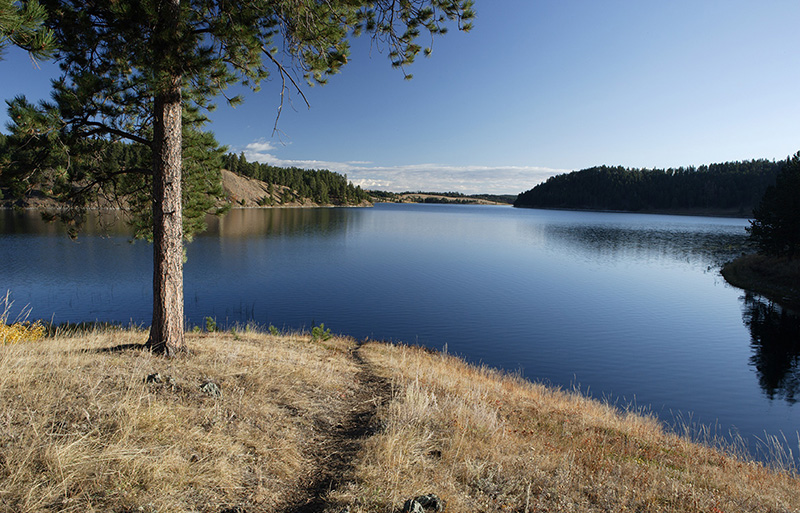
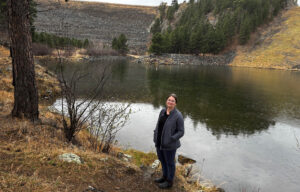
Located 25 miles west of Rapid City, South Dakota, Deerfield Lake is part of the Deerfield-Pactola reservoir system, which supplies irrigation water to thousands of acres of farmland, provides municipal and industrial water for Rapid City, and helps control flooding.
But the effort went beyond testing scenarios. It translated decades of operational knowledge and experience into a transparent decision-making framework. We worked with operators and project partners to capture both documented operating policies and the institutional knowledge used to interpret them, creating a model that reflected how the system is managed in practice rather than in theory. Rather than replacing operator judgment, the model helped make assumptions explicit, test alternatives consistently, and reveal the consequences of different management choices.
The value of the analysis came from showing how operating approaches performed across a wide range of plausible futures. We evaluated results against goals for water-supply reliability, watershed health, and flood-risk reduction while making tradeoffs visible. By documenting operational logic and testing it under hundreds of hydrologic conditions, the partners gained a shared framework for exploring alternatives and identifying strategies that could perform reliably in uncertainty. The project ultimately provided a transparent, defensible foundation for future reservoir planning and decision-making.
Milavec Reservoir: When water quality becomes central to water supply
For other Western communities, water-supply planning depends less on how much water is available than on whether it’s usable for its intended purpose. In Colorado, the Town of Frederick’s work at Milavec Reservoir shows how water quality can be inseparable in water supply planning.
The town first engaged Barr to evaluate potential downstream water quality impacts from proposed reservoir releases. As the work progressed, it broadened into a larger effort examining how the reservoir could support the town’s water supply if nutrient concerns and operational constraints associated with persistent algal blooms were addressed.

An eagle soars over Milavec Reservoir in Frederick, Colorado. Barr is helping the city take a holistic, science-based approach to managing reservoir water quality and protecting future water supply.
“The project became all about future water supply,” Nathan explained. “If the town is going to rely on this reservoir in the future, they need to understand how operations and water quality affect its reliability as a water source.” By combining water quality monitoring, analysis, and modeling with regulatory expertise, Barr is helping the town make informed decisions about the reservoir’s long-term role as a source of drinking water.
Are your reservoir-planning assumptions still working? |
As hydrologic variability increases, many water supply systems are operating under assumptions developed for different conditions. Consider these questions:
If these questions are difficult to answer, it may be time to rethink your planning approach. |
“Planning efforts like these should help clients understand what’s possible now, and what infrastructure or management decisions they may need to make down the road,” Nathan added. Planning that accounts for both water quantity and quality can lead to realistic, forward-looking decisions before supply or operational constraints become crises.
Preparing for—not predicting—what comes next
Reservoirs across the western U.S. are entering a period of sustained change. Variability is increasing, tradeoffs are becoming more pronounced, demand is rising, and decisions carry greater consequences. As we prepare for a wider landscape of possible outcomes, the way we plan and manage reservoir operations needs to change too.
Models remain critical tools for this, but their value depends on how they are applied. This requires a broader perspective that treats reservoirs as complex systems shaped by technical, operational, regulatory, and environmental realities. In the end, the question is no longer whether models can simulate the future. It’s whether planning efforts can translate that insight into decisions that hold up when the future arrives.
Whatever your water management priority may be—increasing supply, meeting demand more reliably, or addressing water-quality concerns—Barr can help reservoir managers prepare for uncertainty and make informed decisions with confidence. Connect with us to explore strategies for building resilience.
Interested in advanced applications of RiverWare?
Join us at the RiverWare User Group Meeting in Boulder, Colorado, August 26 and 27, 2026, at CU Boulder’s William’s Village Community Center. Susan Behery will give a presentation on Barr’s reservoir modeling and planning services supporting the West Dakota Water Development District’s Deerfield-Pactola reservoir system.
About the authors
Nathan Campeau, a vice president and senior water resources engineer in Barr’s Denver office, helps communities, utilities, and resource managers address complex water challenges. He specializes in water-supply planning, hydrologic and hydraulic modeling, flood risk management, stormwater systems, and water quality. Nathan works closely with clients throughout Colorado and the Intermountain West, helping them make informed decisions about reservoir operations, water resources infrastructure, and long-term resilience in the face of changing climate and water demands.
Susan Behery is a senior water resources engineer in Barr’s Durango, Colorado, office with nearly 20 years of experience in reservoir operations, water-supply forecasting, hydrologic modeling, and water resources planning across the western U.S. Prior to joining Barr, she spent 13 years with the U.S. Bureau of Reclamation, where she supported reservoir operations and water management in the Colorado River and San Juan River basins. Today, she helps water managers, utilities, irrigation districts, and communities navigate uncertainty through scenario planning, forecasting, and real-time operational support.