Trails as essential infrastructure: How communities are stacking benefits
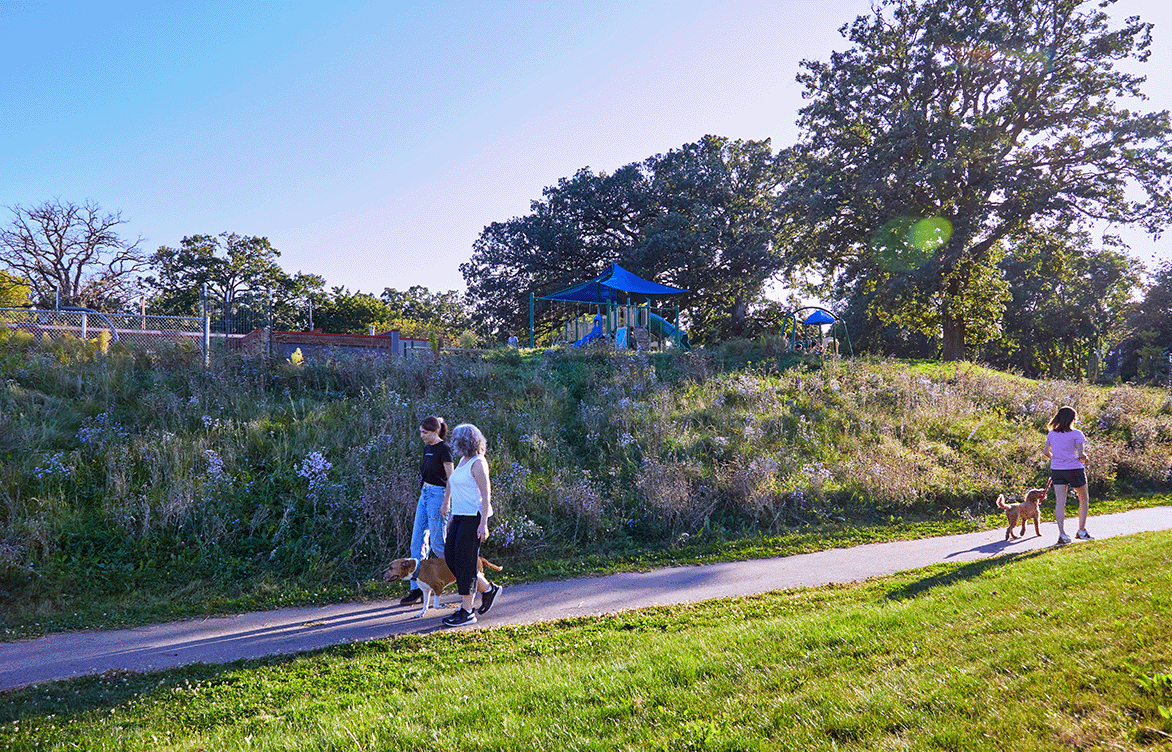
Article summary: Trails have outgrown their reputation as isolated recreational amenities or informal routes. Today, they are widely valued as essential infrastructure that ties communities together and enhances our quality of life. Cities investing in well-planned trail systems are being rewarded not only with healthier, more connected communities but also with increased tourism and stronger economies. In northern Minnesota, where Barr has helped cities and other organizations plan, design, and optimize trails, the stacked benefits of these investments have been transformational.
Trails matter more than ever
Communities responding with intentional, well-designed trail systems are seeing lasting economic, social, and cultural benefits.
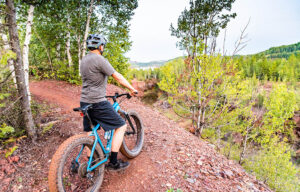
Across the United States, growing interests in wellness, connection to nature, and alternative transportation options are drawing more people to trails every year. Communities that respond with intentional, well-designed trail systems are seeing lasting economic, social, and cultural benefits. One example is taking shape on Minnesota’s Iron Range, where smaller cities such as Hibbing and Chisholm are leaning into their mining history and the rugged beauty of mined landscapes to build transformative trail projects. Chisholm’s Redhead Mountain Bike Park, a world-class, single-track trail system and park built on idled mine pits and piles, is just one of many projects redefining the region’s mining towns as hubs for outdoor recreation.
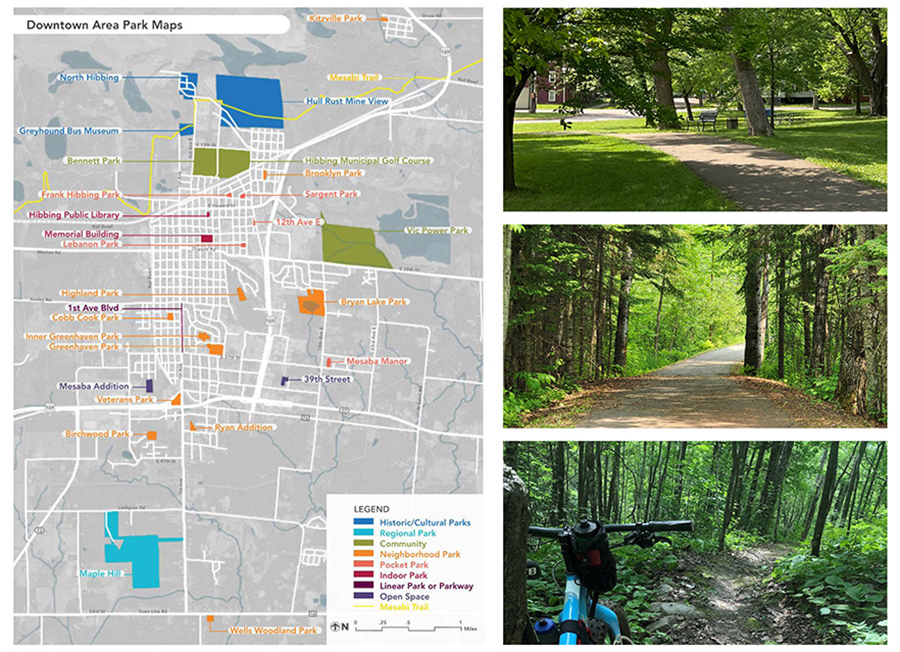
In 2023, we were honored to assist the City of Hibbing in developing the city’s first comprehensive master plan for parks and trails—a critical first step toward improving the city’s 1,800 acres of parkland to better serve residents and visitors. The data we gathered to guide the master plan underscored the growing value of trails. A 2021 survey by the National Sporting Goods Association showed that four of the top ten recreational activities in the United States rely on trails: walking (#1), hiking (#5), running (#7), and cycling (#8). Some of these activities saw steady growth from 2012 to 2021, with walking increasing by 22 percent, hiking by 16 percent, and mountain biking and cycling each by 9 percent. Trails became a focal point of the master plan, which will guide future investments that improve the connectivity and cohesiveness of the city’s recreational assets.
Measurable successes from purposeful connections, pooled resources, and a shared story
On the Iron Range, city efforts like Hibbing’s are being amplified at the regional level. The newly formed Arrowhead Coalition of Trails brings together representatives from Iron Range cities and major trail user groups (such as Mesabi Trail, Redhead, ATV clubs, and snowmobile clubs) with the goal of creating a unified, contiguous trail system across northeastern Minnesota. By coordinating planning, promotion, and investment across trail types and communities, the coalition is working to strengthen regional connectivity and expand recreation opportunities, maximizing the returns of existing trail infrastructure.
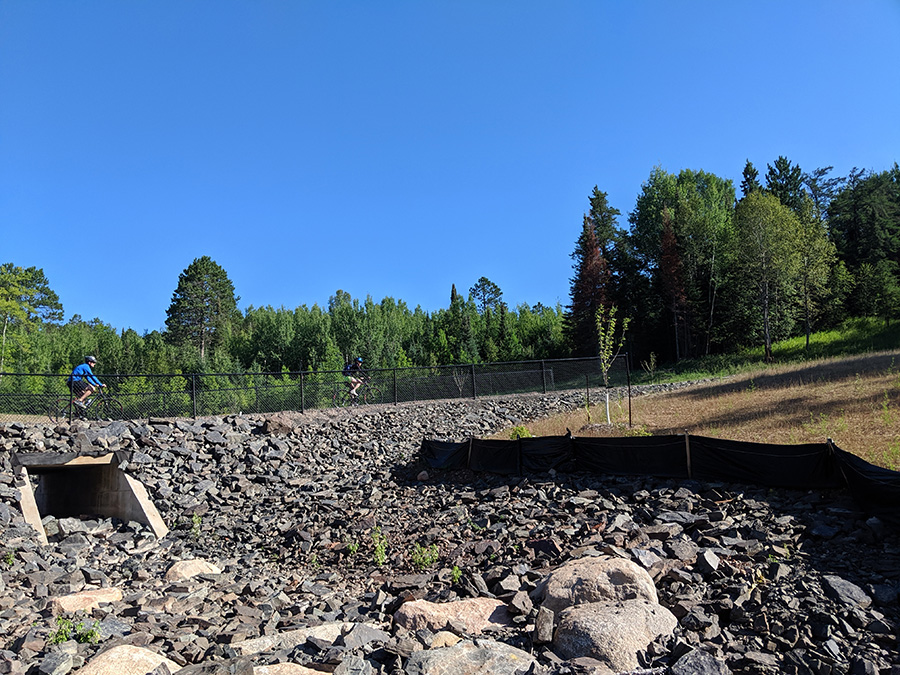
The outcomes are visible and measurable. At the coalition’s inaugural conference in 2024, University of Minnesota researchers presented findings from a regional study of ATV trail users, indicating that visitors spend substantially more than residents on lodging, dining, retail, and recreation. The study also found that visitation at improved trailheads increased by as much as 70 percent over three years, demonstrating a clear connection between strategic trail investment and rural economic growth.1
Strateligent, a marketing firm working with Discover the Range and the Mesabi Trail, presented additional insight.2 Their data highlighted how purposeful storytelling, branding, and placemaking have elevated the trail’s visibility and use, resulting in a 679-percent increase in online map orders and more than 177,000 Mesabi Trail users in 2024 alone. Blending storytelling into wayfinding for trail projects has helped channel visitors into nearby towns, supporting local businesses and growing the region’s reputation as an outdoor recreation destination.
Trails are no longer just paths through the woods; they are tools for public health, engines of economic development, and platforms for community storytelling.
As the Iron Range is showing, trails are no longer just paths through the woods; they are tools for public health, engines of economic development, and platforms for community storytelling. When communities invest in trails, they build not only recreational amenities but also stronger, more connected, and more resilient places to live, work, and visit.
Iron Range communities stacking the benefits of well-planned trails
Hibbing
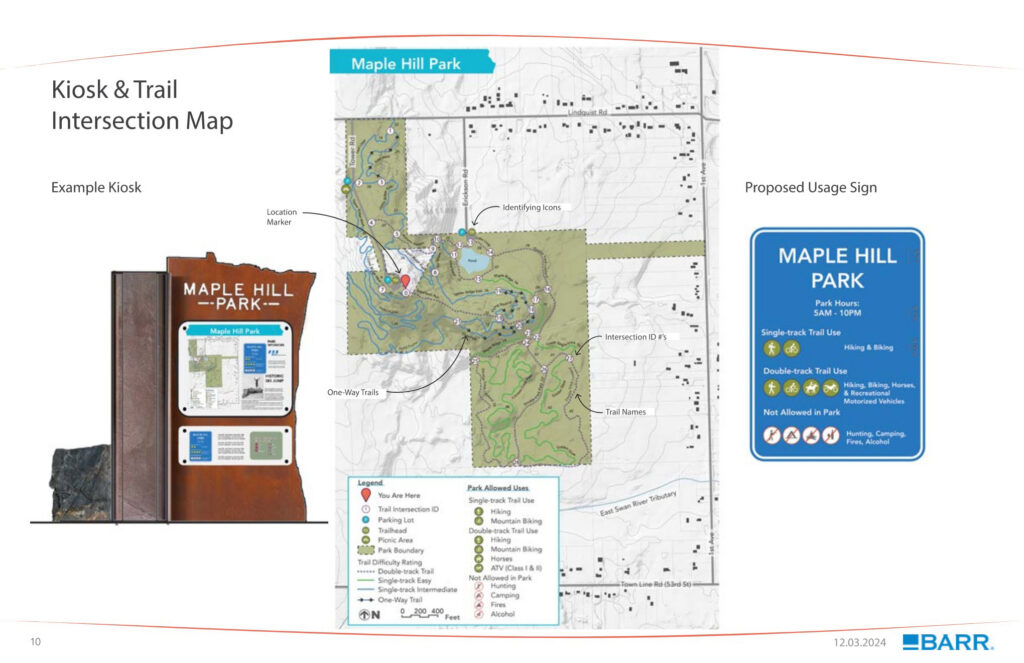
During the development of the Parks and Trails Master Plan, Barr and the City of Hibbing found that the city’s trail system has strong individual assets but limited connectivity. Popular destinations such as Carey Lake Park, Maple Hill Park, neighborhood parks, schools, and regional trail corridors were unconnected, requiring users to travel on busy streets or rely on informal and inconsistent routes. Despite strong community interest in walking, biking, and trail-based recreation, gaps in safety, wayfinding, and continuity limited everyday use.
As a result, the Master Plan identified a trail and bike-lane plan as an early priority. Focusing on physical trail connections allowed the city to optimize the functionality of existing trails by establishing safer routes, bike lanes, and coordinated signage rather than pursuing new unconnected trails. Barr evaluated opportunities and constraints—prioritizing high-impact connections and developing a phased implementation strategy that aligned near-term improvements with long-term planning and funding opportunities.
A more continuous trail system in Hibbing improves pedestrian and bicycle safety, wayfinding, and access to parks, commercial areas, and the regional Mesabi Trail and ATV trails. By supporting non-motorized commuting and active lifestyles, the plan also advances Hibbing’s broader quality-of-life goals. We’ve supported the city’s implementation of both the master plan and the trail and bike-lane plan with prioritization assistance and planning-level cost estimation.
Chisholm
At Chisholm’s Redhead Mountain Bike Park, strategic trail planning transformed a post-industrial site into a regional travel destination. In 2024, Barr and the City of Chisholm developed the Redhead Master Plan with the primary goal of securing the Greater Minnesota Parks and Trails Commission’s (GMPTC’s) designation as a trail of regional significance—a designation that unlocks access to funding for capital improvements and long-term park development. To meet GMPTC criteria, the plan focused on improving park functionality, guiding future expansion, and establishing Redhead as a focal point for regional recreation and tourism.
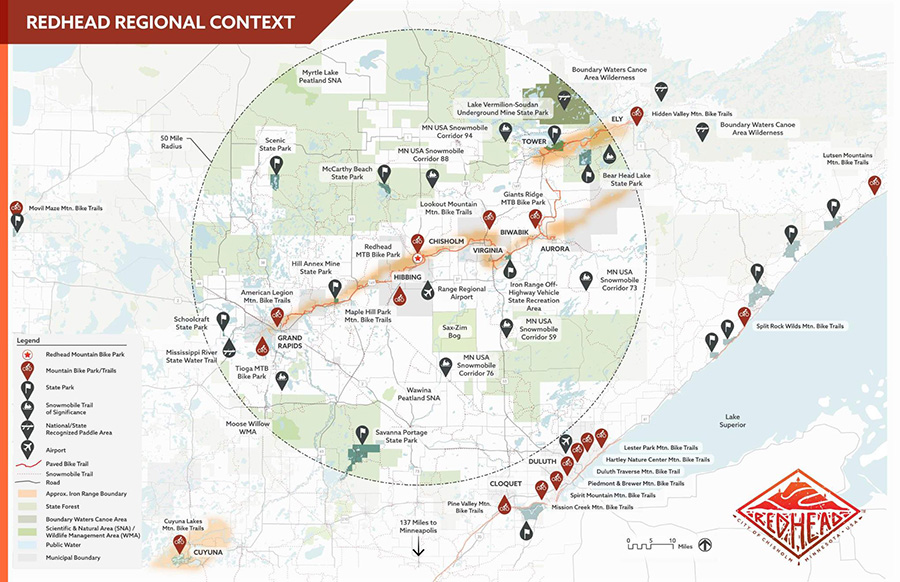
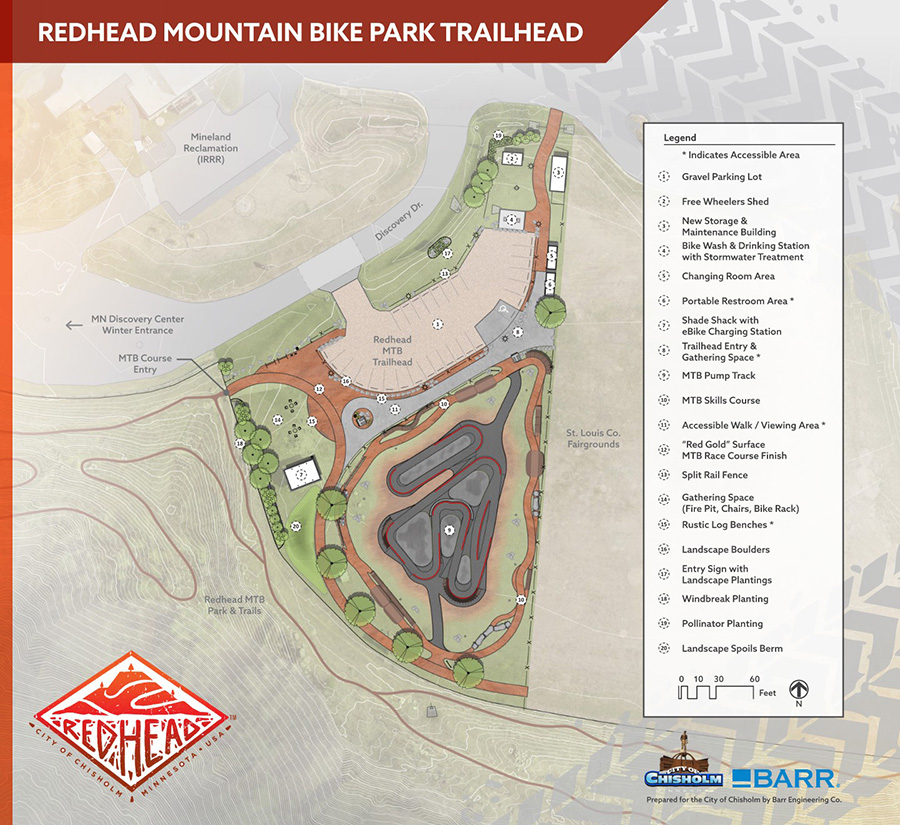
Redhead’s stacked benefits extend far beyond its borders. The park expands Chisholm’s recreational offerings and increases tourism while generating significant economic activity, including nearly $1 million in local revenue from a single championship race and visible growth of cycling-related businesses in downtown Chisholm. The park enhances city livability and serves as a powerful storytelling platform by providing physical access to the region’s mining heritage. We’re currently leading a trailhead improvement project for the city that will incorporate a UCI-rated (Union Cycliste Internationale) asphalt pump track by American Ramp Company (Velosolutions), a mountain bike skills course, an official race finish area, and enhanced site amenities such as expanded parking, viewing areas, eBike charging, and a bike- and pet-wash station.
Redhead is more than a trail system—it’s a dynamic public space that honors Chisholm’s past, present, and future.
As Redhead continues to evolve, its multiple functions as a competitive mountain biking venue, recreation destination, historical interpretation and storytelling medium, and community gathering space are likely to attract a more diverse range of users. This multifunctionality not only broadens the park’s appeal but also compounds its value across economic, cultural, and social dimensions. Redhead is more than a trail system—it’s a dynamic public space that honors Chisholm’s past, present, and future.
Connecting the dots
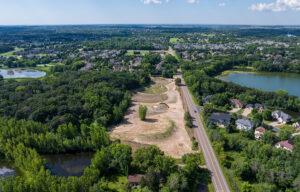
Back in Hibbing, improvements are underway at Carey Lake Park. Over 1,000 acres, Carey Lake is Hibbing’s largest park, valued for its expansiveness and quiet, woodland character. In 2024, Barr partnered with the city to plan and design several new amenities, including a new RV campground. In examining opportunities to maximize project value, trails emerged as a practical, high-impact addition. We considered enhancements to the existing cross-country ski trail system, including a new trailhead, expanded winter recreation opportunities such as fat biking and snowshoeing, and a boardwalk hiking trail. The project has expanded to include targeted trail improvements, including city-led upgrades to ski trails and a new campground trailhead that improves access and safety by separating ski, fat bike, and snowshoe uses.
The Carey Lake Park project reflects where trail making is headed—trail systems with strategic connections that maximize community benefit.
One of the more forward-looking recommendations was a single-track mountain bike connection between Carey Lake Park and Redhead. Linking the city’s largest park to a nationally recognized riding destination would create a continuous mountain-bike trail experience not yet seen on the Iron Range—one that would connect Hibbing’s and Chisholm’s trail investments into a single, shared recreation destination. It would give campers at Carey Lake direct access to high-quality single-track trails while helping both cities benefit from the regional and national visibility generated by improvements to Redhead, the Mesabi Trail, and the regional ATV trail system. The Carey Lake Park project reflects where trail making is headed—trail systems with strategic connections that maximize community benefit.
Could your trail systems better serve your community?
Trail investment projects on the Iron Range have taught us that intentional trail planning can stack benefits for recreation, culture, tourism, health, and the economy. At every stage of a project lifecycle, Barr is partnering with cities, nonprofit trail organizations, and private recreation operators to transform a vision into a coordinated, fundable, and buildable trail project that maximizes local benefits. Whether your community is identifying trail projects, refining a master plan, or preparing to pursue funding and construction, Barr can help identify priorities and opportunities, understand costs, and design projects that remain true to your goals. Contact us to get started.
About the authors
Andrew Papke-Larson, a landscape architect with nine years of experience, has a keen interest in parks, trails, and outdoor recreation planning. He brings a strong personal passion for parks and trails into his work, helping guide communities in planning and designing park and trail systems that support recreation, improve connectivity and access, strengthen community identity, and promote long‑term stewardship. Andrew has contributed to projects focused on master planning, trailhead design, site design, wayfinding, and signage, supporting projects from early visioning through implementation‑ready design.
Pete Kero, vice president and senior environmental engineer, has more than 30 years of environmental design, permitting, and reclamation experience for public and private sectors across the U.S. He is the visionary behind the award-winning Redhead Mountain Bike Park in Chisholm, Minnesota, which repurposed several former iron-mine pits and stockpiles into a destination regional park for mountain biking, hiking, water recreation, and all-terrain vehicles. The project has been featured by Outside Magazine, the Sierra Club, and in the nationwide documentary Biketown. Pete’s book Minescapes: Reclaiming Minnesota’s Mined Lands, which was published by the Minnesota Historical Society Press, won a 2024 Minnesota Book Award.
Andrea Wedul, senior landscape architect, is a “land shaper” with over 20 years of experience. She moved to Duluth, Minnesota, in 2015 to pursue her passion for helping communities cultivate a regional fabric of rich recreational resources and culturally grounded places. She helps communities develop complex sustainable strategies to effectively see, plan, use, manage, and restore their parks and trails, as well as transform mine lands, ports, and other working landscapes into community amenities. She recently led the design of a new trailhead and mountain-bike pump track at Redhead Mountain Bike Park.
Marcy Bean, senior landscape architect, has over two decades of experience designing places for people to engage with natural resources. Passionate about integrating green infrastructure into public spaces, Marcy’s work ranges from master planning and stakeholder facilitation to placemaking and park design, all through a natural-resources lens. She has broad experience in the design of innovative stormwater management systems, specializing in stacking infrastructure to meet multiple project goals. Marcy recently helped the City of Hibbing, Minnesota, develop its first master plan for parks and trails. She also led the master planning for Redhead Mountain Bike Park.
Brendan Dougherty, senior landscape architect, has 16 years of experience in trail planning, sustainable landscape design, and ecological restoration. He works on public‑sector projects involving trail corridors, nature‑based recreation, and site design in sensitive natural areas. His work includes planning and conceptual design, designing interpretive graphics, and preparing construction-ready documents.
References
1 Brigid Tuck, John Bennett, and Madelyn Wehe (University of Minnesota Extension), “Findings from an ATV Trails Study in Northeast Minnesota” presentation, Arrowhead Coalition of Trails October 2024 Meeting, City of Virginia, Minnesota, October 16, 2024.
2 Aaron Hautala (Strateligent), “Mesabi Trail: Tell a Purposeful and Visual Story” presentation, Arrowhead Coalition of Trails October 2024 Meeting, City of Virginia, Minnesota, October 16, 2024.
Related projects
Mineland transformed into bike park
Barr partnered with the City of Chisholm to design and permit Redhead Mountain Bike Park on an inactive iron-mine site in northern Minnesota. Barr designed more than 35 miles of relocatable single-track trails to avoid sensitive environmental features while preserving future mining potential. The project balanced rider experience, safety, and sustainability, and it shows how reclaimed mine lands can support recreation and economic development.
Hibbing Parks and Trails Master Plan
The City of Hibbing looked to Barr to help develop its first comprehensive parks and trails master plan, completed in 2023. We mapped and assessed the city’s 33 parks and 1,800-acre trail system, creating a GIS-based inventory informed by demographics, recreation trends, and community input. The plan guides future investment with park classifications, maintenance priorities, and clear next steps for high-value improvements.
Hibbing Trails and Signage Plan
Barr partnered with the City of Hibbing to create a trails and signage plan that improves safety, strengthens bike and pedestrian connections, and supports recreation and transportation goals. Building on the city’s new master plan for parks and trails, the plan identified key gaps and priority corridors linking neighborhoods, parks, schools, downtown, and regional trails. It recommends practical trail and bike-lane connections, phased with future infrastructure projects, and is supported by a cohesive wayfinding system reflecting Hibbing’s natural and industrial heritage.
Carey Lake Park recreational planning
Barr partnered with the City of Hibbing to update the master plan for Carey Lake Park, identifying opportunities for expanded recreation while preserving the park’s natural character. Building on community input, Barr prioritized improvements, including a new campground and expanded trails, and supported planning by conducting a wetland delineation and cultural resource review. We also led the design of a new RV campground with construction-ready plans and phased implementation to support year-round recreation.